






Why purlins and subpurlins matter in metal retrofit design
By Jesse Sanchez.
Understanding framing, load paths and real-world testing helps ensure your project is a code-compliant and durable metal-over-metal retrofit.
When an existing metal roof reaches the end of its service life, retrofitting is often the easiest, least invasive and most cost-effective replacement strategy. Companies such as Roof Hugger emphasize that beneath every successful metal-over-metal project is a structural story that cannot be overlooked. Understanding the roles of purlins and subpurlins is essential to delivering a high-quality, code-compliant and long-lasting new roof.
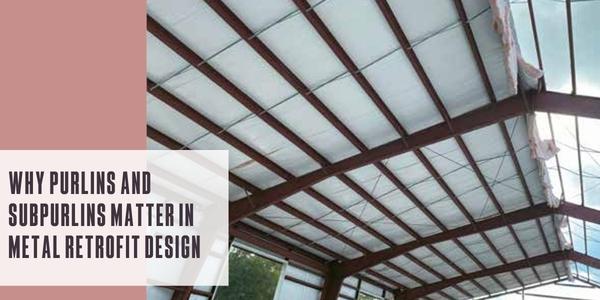
In older pre-engineered buildings, purlins are typically spaced five feet on center, eight inches deep and formed as Z-shaped members spanning from frame to frame. Many are continuous-span members that overlap at frames and act together to distribute loads. Their bracing needs depend heavily on the roof system above them. Through-fastened panels can provide diaphragm strength, often reducing additional bracing, while standing-seam systems offer minimal diaphragm support and require more structural reinforcement.
During a retrofit, two structural issues must be addressed: performance and weight. Panel clip spacing must be analyzed for code-compliant attachment, and panel behavior can vary significantly when fastened to subpurlins instead of full-depth purlins. Additional loads, including photovoltaics or rooftop equipment, must also be evaluated against existing capacity.
Notched subpurlins are often the most cost-effective framing option because they minimize added height and dead load. However, subpurlins are not the same as purlins. Differences in steel grade, flange size and geometry directly affect uplift and pullout performance. Some suppliers use lower yield Grade 30 steel, which can reduce pullout values by as much as 50%.
Because panel combinations, gauges and framing variables vary widely, computer simulations alone are not enough. Testing under standards such as ASTM E1592 and AISI S908 provides the validated data needed to make informed decisions. In metal retrofit design, real performance testing, not theoretical modeling, ultimately protects both the structure and the owner’s investment.
Learn more about Roof Hugger in their Coffee Shop Directory or visit www.roofhugger.com.
About the author

Jesse is a writer for The Coffee Shops. When he is not writing and learning about the roofing industry, he can be found powerlifting, playing saxophone or reading a good book.
Recommended For You

From mobile app to industry game-changer
Read More ...
Specialty metal prints bring designs to life
Read More ...
One product line, endless applications
Read More ...
UP TO THE MINUTE





Comments
Leave a Reply
Have an account? Login to leave a comment!
Sign In