




Why retrofit roof design matters
By The Coffee Shops™.
Understanding common retrofit approaches and the risks they can create.
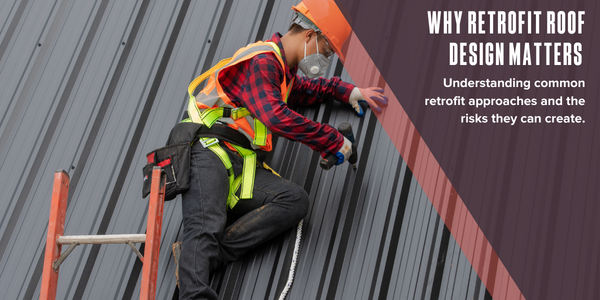
Building owners looking to extend the life of an existing metal roof are often presented with several retrofit options. Not all approaches provide the structural performance needed to withstand wind uplift, snow drift loads and other demands placed on a modern roofing system. Roof Hugger emphasizes that proper installation and structural design play a critical role in long-term roof performance.
One common mistake is the use of hat sections installed over existing metal roof ribs. Because only one screw may connect directly to the existing purlin while another fastens into thin metal panels, the system can lack sufficient pull-out strength. Long attachment screws may also be exposed to movement that can contribute to fastener fatigue over time.
Another frequently seen concern is the use of wood purlins over existing roof ribs. In addition to similar attachment concerns, pressure-treated wood can be corrosive when it comes into contact with metal roofing components. Increased fastener requirements can also add labor and material costs.
Stand-off clip systems can also present an issue. These systems may face challenges when building codes require tighter purlin spacing in roof corners and edge zones. In those situations, additional structural support may be needed to address higher wind-load requirements.
Coatings and thermoplastic polyolefin (TPO) systems must also be carefully considered. Coatings do not address updated code requirements for wind or snow loads, while TPO systems require careful attachment design and do not add structural strength to an existing roof. In addition, TPO systems have a shorter service life than metal roofing systems, reducing their long-term value.
Ultimately, retrofit decisions should be evaluated not only on initial cost but also on structural integrity, code compliance and long-term performance.
Learn more about metal retrofit roofing approaches and the structural considerations involved.
Learn more about Roof Hugger in their Coffee Shop Directory or visit www.roofhugger.com.
Recommended For You
An Effective Siding Shear to Add to Your Tool Arsenal
Read More ...
Nail Catch: Building homeowner loyalty and the power of job sites
Read More ...
New Wall Applications with ATAS Metal Panels
Read More ...
UP TO THE MINUTE





Comments
Leave a Reply
Have an account? Login to leave a comment!
Sign In