









FMI outlook highlights growth opportunities in evolving construction market
By The Coffee Shops™.
Data centers fuel the next phase of growth.
At the 2026 MCA Summer Meeting, Paul Trombitas of FMI delivered a comprehensive market outlook, highlighting strong long-term growth across construction sectors, shifting geographic demand and evolving dynamics driven by data centers, consolidation and emerging technologies.
“This gives us a good sense of what the overall trend of the market is,” Paul said. “No one chases 100% of the marketplace, but it helps you understand where you are headed.”
Nonresidential and infrastructure drive growth
FMI’s Q2 2026 outlook shows a changing balance across construction segments. While residential has historically dominated, recent years have brought greater parity between residential and nonresidential markets.
“Residential and nonresidential are representing very similar volumes now,” Paul explained. “A lot of that is due to high demand from data centers and high-tech manufacturing, along with some softness in residential.”
Looking ahead through 2030, FMI forecasts:
- Residential growth around 4% to 4.5%
- Nonresidential growth near 6%
- Nonbuilding growth approaching 7.8%
Overall, the total construction market is expected to grow at roughly 5.8%, with infrastructure tied to power and data centers driving much of the expansion.
“That power is largely related to supporting the infrastructure for data centers,” Paul said. “That is the biggest challenge right now.”
Data centers reshape the market
Few sectors are influencing construction as dramatically as data centers. FMI projects data centers will continue to drive both demand and project prioritization across the country.
“Data centers themselves are growing at about an 18% annual rate through 2030,” Paul noted, adding that they are now being separated from traditional office construction due to their rapid expansion.
Their impact extends beyond project volume. Data centers are also influencing material demand, construction timelines and geographic investment.
“They only care about getting the new technology in,” Paul said. “They’re willing to pay more for whatever allows them to do that faster.”
Secondary cities gain momentum
Shifting population trends and corporate relocations are fueling growth in emerging markets. Secondary cities such as Raleigh, Charlotte, Nashville and Tampa are becoming major construction hubs. “You follow where the population is moving,” Paul said. “That’s exactly where the dollars are going.”
Corporate relocations are accelerating this trend, driving demand for housing, healthcare, education and commercial infrastructure in these regions.
Metal roofing and wall systems show strong gains
FMI’s updated forecast for metal roofing projects steady growth through 2030, with total square footage expected to increase by roughly 16%. Nonresidential applications are expected to lead that expansion. “There’s stronger growth in nonresidential industrial, institutional and commercial,” Paul said.
Residential still accounts for the majority of metal roofing volume, but nonresidential is gaining share. Replacement work also dominates the market, making up more than 90% of activity.
On the wall side, growth is even more pronounced. FMI forecasts more than 30% growth in metal wall systems, supported by industrial development and increased adoption in residential applications. “Metal wall continues to see very favorable growth,” Paul said, citing durability, sustainability and design flexibility as key drivers.
Pricing and materials remain a concern
Despite strong growth projections, pricing volatility continues to create uncertainty, particularly with aluminum and other substrates. “Aluminum prices have risen sharply, and that has prompted some projects to shift away from metal,” Paul said. “There’s concern about being overpriced relative to competing materials.” This pricing pressure could influence material selection, especially in cost-sensitive segments.
Industry consolidation accelerates
Another major theme highlighted in the presentation was consolidation across the supply chain. Recent acquisitions involving major distributors have reshaped the competitive landscape. “It’s almost an arms race of who can buy more and bigger distributors,” Paul said.
At the same time, new entrants and smaller players are entering the market, creating a widening gap between large, consolidated firms and emerging competitors. “The middle is in a unique position,” Paul explained. “They’re trying to figure out how to position themselves between those two extremes.”
AI adoption expands across construction
Artificial intelligence is also gaining traction across the industry, though adoption varies widely. “Some companies are still hesitant, while others are using it for planning and logistics,” Paul said. He emphasized that successful adoption depends on clearly defined use cases. “The ones doing it effectively are building a business case,” he said. “They’re identifying challenges first, then selecting the right tool to address them.”
Labor, power and supply chain shape the future
Looking ahead, several constraints could influence growth, including labor availability, energy infrastructure and supply chain challenges. Power capacity, in particular, may become a limiting factor for data center expansion.
“In Northern Virginia, data centers already represent nearly 30% of electricity consumption,” Paul said. “That’s going to be one of the biggest issues.”
At the same time, modular construction and prefabrication are emerging as key strategies to address labor shortages and accelerate project timelines.
Strong outlook with strategic considerations
Overall, FMI’s forecast points to sustained growth, particularly in nonresidential and infrastructure sectors, supported by data center expansion and regional shifts. “There’s still a lot of optimism,” Paul said. “But there’s also underlying uncertainty that companies are navigating.”
For contractors, manufacturers and distributors, success will depend on understanding shifting demand, adapting to consolidation and leveraging new tools and technologies to stay competitive.
Learn more about Metal Construction Association (MCA) in their Coffee Shop Directory or visit www.metalconstruction.org.
Recommended For You
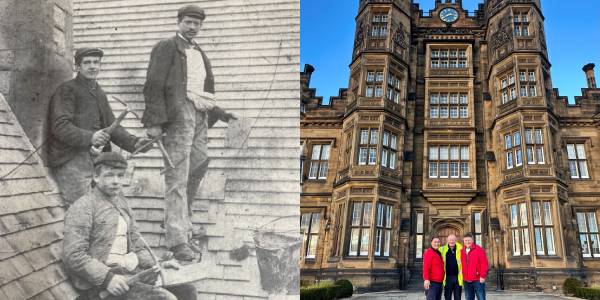
The Durable Slate Company expands into the UK Market with acquisition of Bain & Irvine, a premier Scottish roofing company
Read More ...
Citadel Architectural Products Expands National Sales Team
Read More ...
This Keynote Speaker is a Home Run
Read More ...
UP TO THE MINUTE






Comments
Leave a Reply
Have an account? Login to leave a comment!
Sign In