










Inflation, interest rates and uncertainty: Dr. Basu breaks down the year ahead
By Dani Sheehan.
In a cliffhanger economy, the contractors who stay informed and adaptable won’t just weather uncertainty – they’ll come out ahead of it.
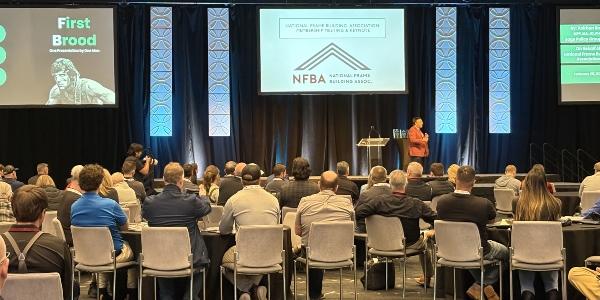
At the National Frame Building Association’s (NFBA) 58th Annual Conference and Expo, economist Dr. Anirban Basu delivered a keynote address on this year’s outlook and how to plan for success. Describing the economic outlook as a cliffhanger, Dr. Basu pointed to a mix of slowing growth, persistent inflation and shifting labor dynamics that continue to shape construction markets. While his forecast did not signal an imminent recession, it highlighted growing risks that contractors should be monitoring, especially as new global developments add further uncertainty to the economic landscape.
Inflation continues to weigh on consumers
One of the most pressing challenges remains inflation, which continues to impact both businesses and homeowners.
Consumer sentiment, Dr. Basu noted, has fallen to levels comparable to the Great Recession, reflecting widespread frustration with rising costs. Over the past several years, cumulative inflation has significantly exceeded the long-term target of 2% annually, with essentials like energy and food driving much of the increase.
For contractors, this has a direct impact on customer behavior. While spending levels may appear strong on paper, much of that growth is simply due to higher prices, not increased demand. In practical terms, homeowners are paying more for the same goods and services, leaving less room in their budgets for unnecessary services.
Interest rates continue to slow construction activity
In response to inflation, the Federal Reserve began raising interest rates in 2022, a move that continues to ripple through construction and real estate markets. Although rates have stabilized, they remain elevated, making financing more expensive for both contractors and their customers. Because much of the construction industry relies on financing, Dr. Basu explained how higher borrowing costs have contributed to:
- Slower project starts
- Reduced housing activity
- Increased hesitation among property owners
This environment requires greater attention to pricing, financing options and customer education.
Growth continues for some
Despite ongoing challenges, the broader economy is still growing, with projections for 2026 ranging between 1.8% and 2.8%. However, Dr. Basu emphasized that this growth is highly uneven. Much of the economic strength is concentrated among higher-income households, while many Americans continue to feel financial strain. A significant portion of the population does not participate in the stock market, limiting their ability to benefit from recent gains. This divide has important implications for construction demand, particularly in residential markets where affordability remains a concern.
Warning signs across construction
The labor market, while still relatively strong, is showing signs of softening. Unemployment remains low at around 4.5%, but job growth has slowed significantly in recent months. At the same time, layoffs are beginning to increase, and hiring activity is becoming more cautious.
For the construction industry, labor challenges remain complex:
- Workforce availability continues to be a concern
- Approximately 30% of construction workers are foreign-born
- Policy changes could further impact labor supply
Several leading indicators suggest that construction activity may face headwinds in the months ahead. Dr. Basu pointed to declines in residential building permits, architectural and design activity and nonresidential construction spending. At the same time, high office vacancy rates continue to affect urban markets, and manufacturing activity has slowed. While the industry is not in decline, these signals suggest that we’re entering a more cautious phase.
While these statistics suggest cause for concern, not all sectors are slowing. One of the strongest areas in construction today is data center development, driven by continued investment in artificial intelligence and digital infrastructure. These projects are helping support overall construction activity, even as other sectors experience slower growth.
Preparing for an uncertain year
Dr. Basu outlined several factors that could shape the direction of the economy in the coming year:
- Layoff activity and labor market shifts
- Continued inflation and material costs
- The pace of interest rate changes
- Ongoing investment in AI and data centers
- Consumer spending, particularly among higher-income households
He also noted that broader global developments could further influence supply chains, energy costs and overall economic stability. While the economic outlook for 2026 may feel uncertain, it also presents an opportunity for contractors to take a more strategic approach to their business.
As Dr. Basu outlined, the current market is not defined by a downturn, but by uneven conditions. This makes awareness and adaptability more important than ever.
Successful contractors can focus on clear communication with their customers, helping them understand long-term value, financing options and the cost of waiting. When homeowners are hesitant, trust and education can make a meaningful difference in their decision making.
At the same time, shifting demand is creating new opportunities. Growth in sectors like data centers and infrastructure, along with continued investment from higher-income households, means there are still strong pockets of activity for contractors who are positioned to serve them. Operational efficiency and diversification are becoming key differentiators. With material costs and labor challenges still in play, contractors who streamline their processes, strengthen supplier relationships and plan ahead for pricing fluctuations are better equipped to protect margins.
Perhaps most importantly, periods of uncertainty often reward those who stay engaged in their industry. Events like NFBA’s annual expo provide opportunities to learn from peers, explore new solutions and stay informed about the trends shaping the market.
While the year ahead may bring challenges, it also offers the chance to sharpen your strategies, strengthen your business and position yourself for long-term success.
Learn more about National Frame Building Association (NFBA) in their Coffee Shop Directory or visit www.nfba.org.
About the author

Dani is a writer for The Coffee Shops. When she's not writing or researching, she's exploring new hiking trails or teaching yoga classes.
Recommended For You
Arup partners with USGBC-CA to launch California Wildfire Rebuilding Guide
Read More ...
Trade Association Coalition announces Q2 findings from market index survey for reroofing
Read More ...
National Women in Roofing Day Highlights
Read More ...
UP TO THE MINUTE






Comments
Leave a Reply
Have an account? Login to leave a comment!
Sign In