

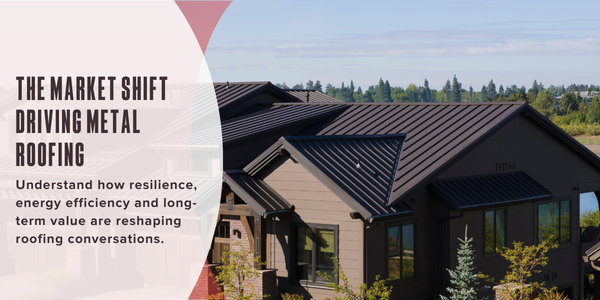
The market shift driving metal roofing
By Dani Sheehan.
Understand how resilience, energy efficiency and long-term value are reshaping roofing conversations.
From increasingly destructive hailstorms and hurricane-force winds to rising insurance premiums, higher energy costs and evolving building standards, homeowners and property owners are rethinking what role their roof plays in performance, longevity and resilience. As a result, owners are exploring roofing systems designed to perform in more demanding environmental conditions. Among those alternatives, metal roofing continues to gain momentum. While asphalt still covers nearly 80% of residential roofs in the United States, industry experts project the residential metal roofing market will continue growing by more than 4% annually in the years ahead.
By understanding the forces reshaping the market and how to position metal roofing within that conversation, you can grow your business to meet changing customer expectations, differentiate your offerings and build a more resilient business long-term.
Why the market is changing
Metal roofing’s growth is the result of multiple market forces converging at once, which has reshaped how homeowners, insurers, builders and policymakers think about roofing performance.
1 – Severe weather is changing customer priorities
Extreme weather events are becoming more frequent, more costly and more destructive across the United States. In fact, the U.S. has experienced nearly six times more billion-dollar severe storms over the last 20 years compared to the previous two decades, with annual losses climbing from approximately $2.5 billion to more than $15 billion.
In hail-prone regions, more than 12 million U.S. properties are now considered at high risk for hail damage, while coastal and inland wind events continue pushing homeowners to seek roofing systems designed for greater resilience.
2 – Insurance incentives are driving material decisions
More than one-quarter of residential insurance claims paid in 2024 were related to roof repair or replacement, driving insurers to look for building materials that reduce long-term risk. As insurers continue investing in resilience through organizations like the Insurance Institute for Business & Home Safety (IBHS), more homeowners are gaining access to premium discounts, grant programs and incentive programs tied to impact-resistant, storm-resilient roofing systems. Depending on the insurer and state, these incentives can range from 5% to 55% off insurance premiums.
Programs like the FORTIFIED Roof, an initiative of IBHS and now active in all 50 states, are further accelerating demand for roofing systems that can meet stricter performance standards. More than 80,000 homes have already received FORTIFIED certification nationwide.
3 – Energy costs are changing the ROI conversation
As residential electricity costs continue trending upward – up roughly 6-7% year over year in late 2025 and early 2026 – homeowners are paying closer attention to how building materials impact long-term operating costs.
This is creating new interest in roofing systems that support energy efficiency, reduce heat gain and improve year-round comfort. Metal roofing’s reflective properties, cool roof compatibility and long service life are helping shift roofing conversations from upfront costs to lifecycle return on investment.
4 – Building codes and sustainability expectations are growing
State legislation, insurance reform and climate-focused building initiatives are beginning to influence how roofs are designed, installed and specified. As communities look for ways to reduce disaster recovery costs, improve wildfire mitigation and support energy-efficient construction, more resilient roofing systems are gaining traction. Metal roofing’s recycled content, full recyclability and solar-ready compatibility position it well within this evolving regulatory and consumer landscape.
Why homeowners are choosing metal roofing
While curb appeal and upfront cost still matter, more property owners are weighing long-term durability, energy performance, maintenance needs and resilience against severe weather when making roofing decisions. This creates an opportunity to position metal roofing not simply as an alternative product, but as a long-term solution designed to meet evolving homeowner priorities.
1 – Built for severe weather
Many metal roofing systems are engineered to withstand wind speeds exceeding 140 miles per hour through interlocking panel designs and mechanically fastened installation methods. In hail-prone areas, many products achieve a UL 2218 Class 4 impact rating, the highest impact-resistance classification available. This testing evaluates a roof system’s ability to withstand repeated impacts without failure.
Metal roofing also performs well in regions with heavy snow accumulation. The strength of steel panels allows many systems to withstand substantial snow loads while encouraging controlled snow shedding when properly designed with snow retention systems.
In wildfire-prone regions, metal roofing systems often carry a Class A fire rating because metal is naturally non-combustible. These systems are designed to resist flame exposure, including sparks and flying embers, and can help support broader fire-resilient building strategies.
Coastal environments create another challenge for roofing systems due to salt exposure and corrosion concerns. In these markets, protective paint systems and coatings become especially important. Choosing the right substrate, finish and coating system helps ensure long-term durability and appearance retention in harsh environments.
2 – Energy efficiency matters
Metal roofing naturally reflects solar radiation and releases absorbed heat more efficiently than many traditional roofing materials. This helps reduce heat transfer into the building and can lower cooling demand during periods of peak energy use.
Cool roof technology is becoming increasingly important in both residential and commercial construction. According to resources from the Cool Roof Rating Council (CRRC), roofing systems with higher solar reflectance and thermal emittance can help reduce heat gain, improve indoor comfort and contribute to lower cooling loads.
- Solar reflectance measures how much sunlight a surface reflects.
- Thermal emittance measures how effectively a material releases absorbed heat.
- Solar Reflectance Index (SRI) combines both measurements into a standardized metric used to compare roofing performance.
Steel roofing panels with reflective coatings can achieve strong solar reflectance values while allowing heat to dissipate efficiently.
3 – Long-term performance and sustainability
While traditional roofing materials may require replacement multiple times over the lifespan of a home, metal roofing systems are often designed to last 40–70 years with proper installation and require relatively low ongoing maintenance. The extended service life reduces long-term replacement costs, minimizes disruption and decreases landfill waste associated with tear-offs and disposal.
For homeowners considering solar installation, metal roofing can be an ideal long-term pairing. Because the roof system is designed to last for decades, homeowners are less likely to face the cost and complication of removing and reinstalling solar panels for a roof replacement midway through the solar system’s life cycle.
Moving forward
As market expectations continue evolving, contractors are being asked to deliver systems that offer resilience, long-term value, energy performance and peace of mind. By understanding these changing priorities and educating customers effectively, metal roofing represents an opportunity to build stronger customer relationships and position your business for long-term growth.
Stay up to date with the latest industry news when you sign up for the Coffee Shop eNews.
About the author

Dani is a writer for The Coffee Shops. When she's not writing or researching, she's exploring new hiking trails or teaching yoga classes.
Recommended For You
Making a good first impression
Read More ...
Learning from the pros: Roofing marketing 101
Read More ...
Keeping Your Employees Content During the Labor Shortage Crisis
Read More ...
UP TO THE MINUTE

Comments
Leave a Reply
Have an account? Login to leave a comment!
Sign In