






Severe weather and temperature swings: Is your facility protected?
By Greenwood Industries.
Proactive planning and informed system selection help reduce risk, extend service life and support resilient performance.
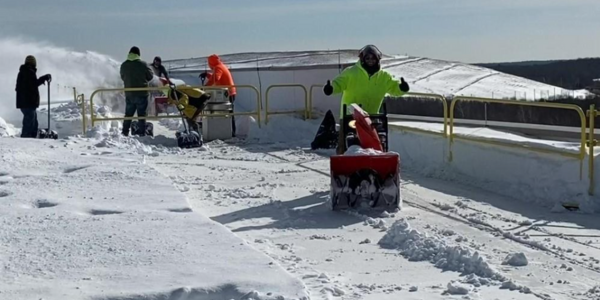
Winter in the Northeast is rarely predictable. One week brings two feet of snow and the next brings temperatures in the 50s. When severe storms and freeze and thaw cycles come into play, facilities can experience significant stress on the systems designed to protect them.
Weather conditions place ongoing demands on buildings, challenging owners and facility managers to think beyond short term fixes and consider how well their exterior building systems are prepared to perform year after year, whether newly constructed or decades old.
That planning begins long before a building is occupied. During early design and construction, decisions around materials, detailing and system integration play a major role in how a facility will perform over time. Selecting assemblies that manage movement, control moisture and withstand seasonal exposure helps reduce long term risk and maintenance demands.
At Greenwood Industries, protecting buildings means understanding how severe weather and temperature fluctuations affect every layer of the building envelope. Greenwood’s work spans public, commercial, institutional, infrastructure and historic facilities across the Northeast, giving teams first hand insight into how different building types respond to weather, use and long term exposure. From new roof installations and full building envelope construction to long-term maintenance and restoration, proactive planning and informed system selection help reduce risk, extend service life and support resilient performance.
The impact of temperature fluctuations
Repeated freeze and thaw cycles are one of the most damaging forces acting on exterior building systems. When moisture enters small cracks, seams or porous materials and freezes, it expands. Over time, this movement widens openings, stresses connections and accelerates material deterioration.
Roofing systems are often the first line of defense. Membranes must accommodate thermal movement while maintaining continuity. Detailing at flashings, penetrations and transitions is especially critical, as these areas experience the greatest stress during temperature swings.
Masonry and concrete systems face similar challenges. Water infiltration followed by freezing can lead to cracking, spalling and joint failure, particularly in parapets, facades and historic structures. In buildings where architectural character must be preserved, these conditions require specialized expertise and compatible repair methods.

Storms, wind and water intrusion
Severe storms introduce additional stresses through wind uplift, driven rain and prolonged moisture exposure. Roofing assemblies must resist wind forces, while architectural metal components require secure attachment and proper expansion detailing.
Waterproofing plays a critical role at foundations, plazas and below grade structures. Systems such as sheet membranes and fluid applied waterproofing are selected based on site conditions and exposure. When properly integrated with drainage systems, these assemblies help prevent water intrusion before it reaches occupied spaces.
Failures at the building envelope can have wide reaching impacts. Interior finishes, equipment and daily operations may all be affected. For schools, hospitals, municipal buildings and commercial facilities, even minor leaks can disrupt essential services and lead to costly repairs.
Key considerations for new construction
- Detail assemblies to accommodate movement. Roofing, air and vapor barriers, and waterproofing systems should be designed to manage thermal expansion, structural deflection and transitions between materials. Proper detailing at expansion joints, perimeters and penetrations is essential to long term performance.
- Specify materials and coatings based on exposure and compatibility. System selection should account for UV exposure, moisture load, wind conditions and maintenance access. Reinforced membranes, fluid applied coatings and compatible waterproofing assemblies provide continuous protection when properly specified and installed.
Why maintenance matters, even on new buildings
 New construction does not eliminate the need for maintenance. Exterior systems begin responding to weather, movement and use immediately after installation. Regular inspections help ensure that membranes, sealants, flashings and drainage systems continue to perform as designed once a building is occupied.
This is where Greenwood Performance Advantage™ comes into play. Delivered following new roof and building envelope construction, Greenwood Performance Advantage™ includes a complimentary post installation service period focused on verifying system performance under real world conditions. During this time, Greenwood remains actively involved through inspections and follow-up support to confirm that systems are functioning as intended as they experience weather and use.
This post ribbon cutting involvement provides owners and facility managers with early visibility into system condition and reinforces accountability beyond project closeout. Addressing minor issues during this phase helps preserve warranties, reduce the likelihood of emergency repairs and support long term system performance.
As buildings move beyond the Greenwood Performance Advantage™ service period, continued oversight becomes increasingly important. Greenwood’s Service Division offers preventative maintenance and repair programs that extend performance over time. GPA 2.0 establishes baseline condition through inspections and reporting. GPA 3.0 adds routine maintenance to reduce preventable wear. GPA 4.0 provides comprehensive support with detailed evaluations and priority response when conditions require immediate attention.
For owners and facility managers, this layered approach supports informed capital planning, extends system life and helps ensure exterior building systems continue to perform well beyond initial construction.
 Expert care for historic buildings
Historic buildings require a different approach. Original materials and construction methods often cannot be treated the same way as modern systems. Incompatible repairs or coatings can trap moisture, accelerate deterioration or compromise architectural integrity.
Expert maintenance focuses on understanding how historic assemblies manage moisture and movement. Techniques such as compatible masonry repointing, selective waterproofing and breathable coatings help protect performance while preserving character. Experienced care extends the life of historic structures and reduces long term risk.
The role of craft and coordination
Materials alone do not ensure performance. Proper installation, detailing and sequencing are critical to how systems behave under stress. Coordination between design intent, fabrication and field execution ensures continuity across the building envelope.
Greenwood’s integrated capabilities, supported by the Greenwood family of brands including TWC Phoenix, allow roofing, waterproofing, masonry and historic restoration work to be coordinated in house. This approach supports consistency, accountability and long term performance.
Looking ahead
Facilities across the Northeast will continue to face challenging weather conditions year after year. The question is not whether buildings will be exposed, but whether they are designed, constructed and maintained to withstand those conditions over time.
Protecting a facility starts with understanding its vulnerabilities and addressing them early, from initial planning through the full life of the building. With informed system selection, quality execution and proactive care, owners can reduce risk, control costs and support reliable performance.
At Greenwood, protecting buildings means designing, building and maintaining exterior systems with resilience and purpose, while caring for the structures that serve our communities.
Learn more about Greenwood Industries in their Coffee Shop Directory or visit greenwoodindustries.com.
Recommended For You

Línea de Ayuda para el Aumento de Precios activada para proteger a las víctimas del huracán
Read More ...
Hurricane Ian and Price Gouging
Read More ...
The value of metal roofing in the face of severe hailstorms
Read More ...
UP TO THE MINUTE




Comments
Leave a Reply
Have an account? Login to leave a comment!
Sign In