


Building a culture-based safety program

RCS Influencer Randy Chaffee says once you develop the culture of safety, it becomes easier to create a program.
Editor's note: The following is a transcript of a conversation with Randy Chaffee of Source One Marketing. You can Read the transcript below, Listen to the recording or Watch the conversation.
Jenny Yu: I'm Jenny Yu with MetalCoffeeShop. And I'm here with Randy Chaffee of Source One Marketing. How's it going?
Randy Chaffee: It's going great. How are you? Good to see you again.
Jenny Yu: Yes. Our January 2026 influencer question is on safety and workforce culture. So, our question is, what do you think contractors should know about building a culture of safety rooted in identity and personal ownership?
Randy Chaffee: That's a great one because I think and I'm happy to see that so many associations and I'm involved with several that we're putting a lot of emphasis from the associations level on safety. It sometimes gets forgotten and especially in the more rural markets of of the country where maybe the likelihood of getting caught is less.
But the culture we need to build is based on something I just said, which is building a safety program. That is a culture and it shouldn't be based on, well, we better do it because we're building closer to a city and we might get caught. Dumb reason in my opinion. The reason should be we don't want our people hurt, right?
Number one, we don't want Billy to lose his job and to be in the hospital for the rest of his life with his family and 12. Well, it could be 12 kids, I suppose, but at home, right? We don't want that. So, it should be done for the right reason. But it you have to build and and that culture word comes back up a lot. You have to build that in because you can have a safety manager, you can have a captain, you can have whatever.
You can have all these policies and manuals and and and go out in the warehouse and do all this training and all that stuff, which you should, but if you don't have a buy-in from everybody, they have to do it because they they understand the value and what can happen to me and my family if I don't do this. And that's more important than because and I know some people say, "Randy, yeah, but you know what? I'm the boss and if I say this is what you're going to do." Fair enough. You are the boss and they should do it because you tell them.
But those get skipped if you're not around sometimes, right? Those get missed. They where they don't get missed is when the people understand there's some very serious stuff happens when you're on a 30-foot roof and you fall off, right? Or you don't handle the forklift, right? Or you on and on and on and on, right?
So, I think you have to develop that identity of I am part of this together. I don't want to get hurt. I don't want to see my buddy that we go have bruskies and beers with on Friday night after work get hurt, right? I know his wife and kids. I don't want him to have that happen. I don't want to show up and tell him, "Hey, I guess what Billy like got hurt pretty bad today." We don't want that.
So, we build that culture that we identify what we need to do. There's a reason for doing it. Not just me as the boss saying you're going to do it. It's me as the boss caring about you, your family, and what we do here. And I think if we develop that and and part of it is the proper training to continue updating on what we're doing, why we're doing it, the new features, and I think you can identify I think it's important to identify uh wins. We don't want any losses.
Losses in safety are always costly either to personnel personally to yourself as from a health aspect and they're costly to the business uh from a stand I with insurance and even if you did everything right there the insurance premiums go up there's a physical or there's a physical cost and a financial cost to have things go haywire when it comes to safety and I think we can't take that risk at all.
So, we have to identify, we have to build a culture, and Jenny, I think we we need to have every person on the team from the the the supervisor, superintendent, owners on down to the newest guy that's running that little magnetic nail picker uper thing, right? That's pretty technical term, right?
You know, that they've got to do things the right way and there's a reason to do it. And there's never you you can you can skimp I took five minutes longer for lunch. You can't skimp on safety ever. For ever, ever, ever. And I think the last thing I'll say on that is people like contests. This shouldn't be a contest, but recognizing we've had six months with no issues at all. We've had a year with no issues at all. We've had three years with no issues at all. This guy here gets an Applebee's card because he spotted something on the job site that was a mistake or a problem that could have hurt somebody. He brought it to our attention. He stopped the crews immediately. Those kind of things.
That's the identity part. We're part of the team here together to make this happen. And I think if we do that, you develop the culture. Once you have a culture, it kind of all takes care of itself with the proper documentation and stuff always, right? But you don't have to be out there hammering on somebody every single day if you've got everybody playing on the team, same team, playing from the same playbook.
Jenny Yu: Amazing. Thank you so much. That's, absolutely, I'm a big believer in the safety thing because we all had somebody in our life that's got hurt.
Randy Chaffee: Yeah. Somehow on a job it almost nobody doesn't know somebody might not be in the construction world even right but and it's it's lifealtering at times and we just don't want that when we can control it accidents call an accident can happen, but boy it should never happen because we didn't do all the things we just talked about right.
Jenny Yu: Exactly thank you so much.
Randy Chaffee: Absolutely it's always a pleasure to see you.
Randy Chaffee is the Owner and CEO of Source One Marketing, LLC. See his full bio here.
Recommended For You
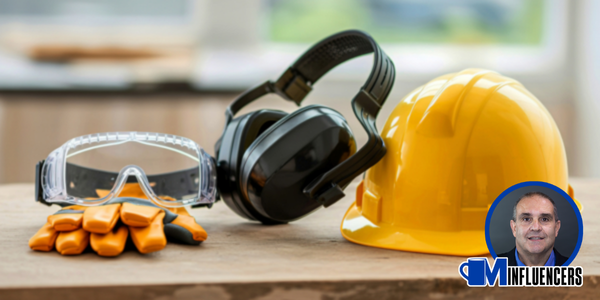
Turning safety rules into personal responsibility
Read More ...
When it comes to safety, simple actions can make a real impact
Read More ...
Building a culture of safety in cold-formed metal structures: A personal responsibility
Read More ...
UP TO THE MINUTE


Comments
Leave a Reply
Have an account? Login to leave a comment!
Sign In